
Green tea and its extracts have been widely researched as potential treatments for cancer, as well as several other diseases. But scientists have struggled to explain how the green tea and its extracts may work to reduce the risk of cancer…
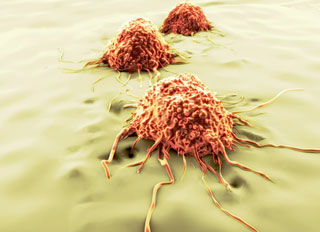
New Way Cancer Extends Discovered by Scientists
UT Southwestern Medical Center cancer researchers have identified a protein critical to the spread of deadly cancer cells and determined how it works, paving the way for potential use in diagnosis and eventually possible therapeutic drugs to halt or slow the…
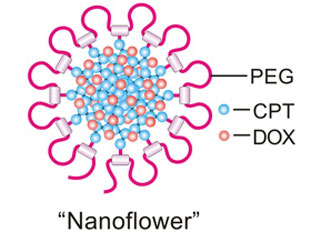
Cancer cells get drug cocktail delivered by nanodaisies
Biomedical engineering researchers have developed daisy-shaped, nanoscale structures that are made predominantly of anti-cancer drugs and are capable of introducing a “cocktail” of multiple drugs into cancer cells. The researchers are all part the joint biomedical engineering program at North Carolina…
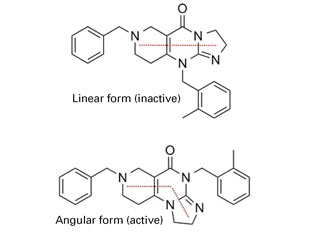
Cancer Drug Structure Discovered by Chemists
A new report shows the structure of a promising anticancer compound, TIC10, differs subtly but importantly from a previously published version. (Source: Scripps Research Institute)Chemists at The Scripps Research Institute (TSRI) have determined the correct structure of a highly promising anticancer…

Potential Link between Brain Development and Breast Cancer Gene
Scientists at the Salk Institute have uncovered details into a surprising—and crucial—link between BRCA1 brain development and a gene whose mutation is tied to breast and ovarian cancer. Aside from better understanding neurological damage associated in a small percentage of people…
Jamming a Protein Signal Forces Cancer Cells to Devour Themselves
Under stress from chemotherapy or radiation, some cancer cells dodge death by consuming a bit of themselves, allowing them to essentially sleep through treatment and later awaken as tougher, resistant disease. Interfering with a single cancer-promoting protein and its receptor can…
Fertility Drugs Do Not Increase Breast Cancer Risk
Women who took clomiphene citrate (brand name Clomid) or gonadotropins as a part of fertility treatment did not experience an increased risk for breast cancer over 30 years of follow-up, compared with women who were not treated with these medications, according…

Experimental Cancer Drug Reverses Schizophrenia in Mice
Johns Hopkins researchers say that an experimental anticancer compound appears to have reversed behaviors associated with schizophrenia and restored some lost brain cell function in adolescent mice with a rodent version of the devastating mental illness. The drug is one of…
Cancer cells explode with new treatment
Researchers at Karolinska Institutet in Sweden have discovered that a substance called Vacquinol-1 makes cells from glioblastoma, the most aggressive type of brain tumor, literally explode. When mice were given the substance, which can be given in tablet form, tumor growth…